


Introduction
On February 6 2026, Dr. Debra Kaysen delivered a full-day workshop on trauma-focused treatments in the context of comorbid alcohol use disorders.
Content
Posttraumatic stress disorder (PTSD) and alcohol use disorders (AUDs) are frequently comorbid and represent a major public health concern (Lai et al., 2015). There are poorer AUD treatment outcomes when comorbid PTSD is untreated, including higher alcohol relapse, use, and consequences. Reviews highlight that trauma-focused cognitive behavioral therapies (TF-CBT) for comorbid PTSD/AUD are more effective for reducing PTSD symptoms and reducing alcohol use than treatment as usual and other comparison conditions (Simpson et al., 2017). However, for many clinicians, assessment and management of substance use is outside of their typical practice.
Dr. Kaysen will review the research evidence regarding the use of trauma-focused CBTs to address PTSD/AUD. Then, using the evidence-based intervention Cognitive Processing Therapy (CPT) as an example, she will describe ways to address alcohol use in the context of providing a trauma-focused CBT. She will discuss ways to assess and monitor drinking, when not to provide a TF-CBT, and strategies clinicians can use to help clients manage their drinking over the course of a TF-CBT. The objective is to provide clinicians with a model more broadly in applying these strategies to trauma focused cognitive-behavioural interventions while working with comorbid AUD.
Learning Objectives
By the end of this workshop, participants will learn to:
• List recommended assessments of alcohol use that can be used before and during trauma-focused CBT.
• Determine which individuals may need a higher level of substance use treatment before beginning a trauma-focused intervention.
• Recognize different motives for alcohol use, and how they may impact TF-CBT
• Describe strategies that can be useful to manage alcohol use over the course of a trauma-focused intervention.
• Incorporate the use of Socratic dialogue to address alcohol-related maladaptive cognitions.
• Apply treatment strategies to a sample case of PTSD/AUD.
Training Modalities
Didactic content, Q&A, polls, and a progressive case study
Key References
Back, S. E., Jarnecke, A. M., Norman, S. B., Zaur, A. J., & Hien, D. A. State of the Science: Treatment of comorbid posttraumatic stress disorder and substance use disorders. Journal of Traumatic Stress.
Hien, D.A., Papini, S., Saavedra, L.M., Bauer, A.G., Ruglass, L.M., Ebrahimi, C.T., Fitzpatrick, S., López-Castro, T., Norman, S.B., Killeen, T.K. & Morgan-López, A. A. (2023). Project Harmony: A systematic review and network meta-analysis of psychotherapy and pharmacologic trials for comorbid posttraumatic stress, alcohol, and other drug use disorders. Psychological Bulletin.
McCauley, J. L., Killeen, T., Gros, D. F., Brady, K. T., & Back, S. E. (2012). Posttraumatic stress disorder and co‐occurring substance use disorders: Advances in assessment and treatment. Clinical Psychology: Science and Practice, 19(3), 283-304.
Nosen, E., Littlefield, A. K., Schumacher, J. A., Stasiewicz, P. R., & Coffey, S. F. (2014). Treatment of co-occurring PTSD–AUD: Effects of exposure-based and non-trauma focused psychotherapy on alcohol and trauma cue-reactivity. Behaviour research and therapy, 61, 35-42.
Simpson, T.L., Goldberg, S.B., Louden, D.K., Blakey, S.M., Hawn, S.E., Lott, A., Browne, K.C., Lehavot, K. & Kaysen, D. (2021). Efficacy and acceptability of interventions for co-occurring PTSD and SUD: A meta-analysis. Journal of Anxiety Disorders, 84, 102490.
Simpson, T.L., Kaysen, D.L., Fleming, C.B., Rhew, I.C., Jaffe, A.E., Desai, S., Hien, D.A., Berliner, L., Donovan, D.& Resick, P. A. (2022). Cognitive processing therapy or relapse prevention for comorbid posttraumatic stress disorder and alcohol use disorder: A randomized clinical trial. Plos one, 17(11), e0276111.
About the presenter
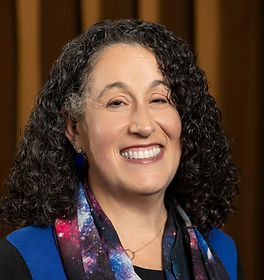
Dr Kaysen is a clinical psychologist and a Professor in the Department of Psychiatry & Behavioral Sciences at Stanford University. She is the Chief of the Division of Public Mental Health & Population Sciences within the Psychiatry Department. Dr. Kaysen is board-certified in cognitive and behavioral psychology by the American Board of Professional Psychology. Dr. Kaysen’s area of specialty, both in research and clinical work is in the care of those who have experienced traumatic events. Her research is situated at the interface of PTSD and addictions and includes both etiologic and prevention/treatment-oriented studies. Her body of research is also notable for her work on adapting evidence-based interventions for diverse populations. Dr. Kaysen is a prolific researcher, publishing over 200 refereed articles. Her research has received support from the National Institute of Alcohol Abuse and Alcoholism, the National Institutes of Drug Abuse, the Department of Defense, and PCORI.
Who should attend
Attendees should have good familiarity with trauma-focused cognitive behavioural therapy for PTSD.
Low Intensity clinical contact hours survey - BABCP Low Intensity Special Interest Group
Please click below if you are interested in contributing to the survey.
The BACP Low Intensity SIG are interested in the impact of clinical contact hours on Low Intensity/Wellbeing Practitioner wellbeing. This questionnaire contains six multi-choice questions and a free text box for you to share your experiences. The answers to these questions will help the BABCP SIG plan how to meet CPD topics and other developments within the SIG. The SIG hope to produce a write up of the answers to this questionnaire to be shared with SIG members and to be used in training.
This FREE conference is for Psychological Wellbeing Practitioners working in Talking Therapies for Anxiety and Depression services and is brought to you by Bespoke Mental Health in collaboration with the NHS National PWP Leads Network.
This is a FREE conference for Mental Health Wellbeing Practitioners (or equivalent) working in NHS secondary care. This full day event includes a Keynote Address by Dr Adrian Whittington, National Clinical Lead for Psychological Professions at NHS England, a Panel Discussion, two Clinical Skills Classes, two Research Presentations and an optional 15-minute Q&A Session focusing on BABCP registration and accreditation.