
Bespoke Members


Introduction
Across the world, Deaf sign language users experience heightened rates of trauma exposure, mood disorders, anxiety disorders, and problematic substance use when compared to the general population. Although there are evidence-based interventions to treat these conditions among hearing individuals, none have been developed for and formally tested with Deaf sign language users. Mental health interventions available to the general population often fail to meet Deaf people’s unique language and cultural needs. Given these challenges, our team has spent the last decade partnering with members of the U.S. Deaf community to develop innovative addiction and mental health resources that are uniquely and expertly tailored for Deaf signing people.
The event will be equivalent to 2hrs of CPD.
Content
During this presentation, we will describe key considerations for adapting mental health interventions to be more linguistically and culturally accessible for Deaf sign language users, as well as ways to collaborate with Deaf sign language users in this adaptation process. We will provided concrete strategies that hearing/Deaf and signing/non-signing mental health providers can apply in their own clinical work with Deaf consumers. We will also share examples of Deaf-accessible mental health and addiction interventions that our team has created through formal clinical research development processes – all of which are open access and can be easily accessed online. In addition to this didactic content, we will host a panel discussion comprised of Deaf mental health providers and consumers from the UK, inviting panellists to share intervention successes and challenges that they have experienced in the field of Deaf mental health. Following the panel discussion, we will invite questions and discussion from the audience.
Learning Objectives
By the end of this presentation and panel discussion, attendees will be able to:
1. Describe the mental health disparities commonly experience by Deaf sign language users.
2. Apply at least three strategies to make their clinical practice more accessible to Deaf sign language users.
3. Appreciate the ways in which longstanding barriers to mental health services have led many Deaf individuals to mistrust mental health providers and avoid engaging in treatment.
Training Modalities
Didactic presentation, video clips of sample, treatment materials, panel discussion & audience Q&A
Key References
Anderson ML, Wilkins AM, Hostovsky S, Pici-D'Ottavio E, Aldalur A, McGinnis F, Meza K. Psychotherapy research in the deaf community: pilot clinical trial lessons learned. Journal of Deaf Studies and Deaf Education. 2025 Jan 31:enaf007. doi: 10.1093/jdsade/enaf007. Epub ahead of print. PMID: 39887011.
Anderson ML, Glickman NS, Wolf Craig KS, Sortwell Crane AK, Wilkins AM, Najavits LM. Developing Signs of Safety: A Deaf-accessible counselling toolkit for trauma and addiction. Clin Psychol Psychother. 2021 Nov;28(6):1562-1573. doi: 10.1002/cpp.2596. Epub 2021 Apr 24. PMID: 33847426; PMCID: PMC8511355.
Anderson ML, Glickman NS, Mistler LA, Gonzalez M. Working therapeutically with deaf people recovering from trauma and addiction. Psychiatr Rehabil J. 2016 Mar;39(1):27-32. doi: 10.1037/prj0000146. Epub 2015 May 18. Review. PubMed PMID: 25984736; PubMed Central PMCID: PMC4651859.
Glickman NS, ed. Deaf mental health care. New York, NY: Routledge; 2013.
Glickman NS. Adapting best practices in CBT for deaf and hearing persons with language and learning challenges. Journal of Psychotherapy Integration. 2009;19(4):354-384.
Glickman NS, ed. Cognitive-behavioral therapy for deaf and hearing persons with language and learning challenges. New York, NY: Routledge; 2009.
About the presenter
Melissa Anderson is Associate Professor of Psychiatry & Behavioral Sciences at UMass Chan Medical School. She is a Gallaudet University-trained psychologist and clinical researcher who strives to provide accessible behavioral healthcare to members of the U.S. Deaf community. She founded the DeafYES! Center for Deaf Empowerment and Recovery at UMass Chan in 2014, where she and her team provide outpatient therapy and conduct groundbreaking research on Deaf mental health. Most recently, Melissa and her team received a five-year, $3.6 million award from the National Institute on Alcohol Abuse and Alcoholism (NIAAA) to launch the first nationwide therapy clinical trial for Deaf people.
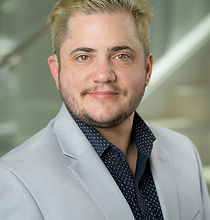
Alexander Wilkins is Assistant Professor of Psychiatry & Behavioral Sciences at UMass Chan Medical School, where he is also the Co-Director of the DeafYES! Center for Deaf Empowerment and Recovery. He is a recipient of a K23 Career Development Award from the National Institute on Alcohol Abuse and Alcoholism (NIAAA). His program of research focuses on a community-engaged approach to developing resources for mental health and behavioral health care for Deaf and Hard of Hearing individuals. He also provides outpatient mental health services for Deaf and Hard of Hearing individuals.
Who should attend
Mental health practitioners from a wide variety of backgrounds (e.g., primary care practitioners, psychologists, nurse therapists, counsellors, psychiatrists, occupational therapists, social workers)
Practitioners who work with older adolescents, young adults, or adults